All Categories
Featured
Table of Contents
Paid search management underwent a significant shift as 2026 began, moving away from simple conversion volume toward sophisticated profit-based outcomes. The days of chasing the lowest cost-per-click are largely over for serious advertisers. Instead, the focus has shifted toward high-intent signals that predict long-term customer value. Machine learning models now handle the heavy lifting of processing billions of auction-time signals, allowing human managers to focus on high-level strategy and data integrity. This transition has changed how budgets are allocated across various Local Ppc.
Modern algorithms in 2026 integrate directly with backend CRM systems to understand the difference between a lead that closes and one that stalls. By feeding this profit data back into the bidding engine, businesses can instruct the machine to bid more aggressively for users who resemble their most profitable customers. This method, often called value-based bidding, ensures that every dollar spent is optimized for Return on Ad Spend (ROAS) rather than just a raw conversion count. Success in Local Ppc now depends on the quality of the data fed into these learning models.
Predictive Modeling and Auction-Time Signals
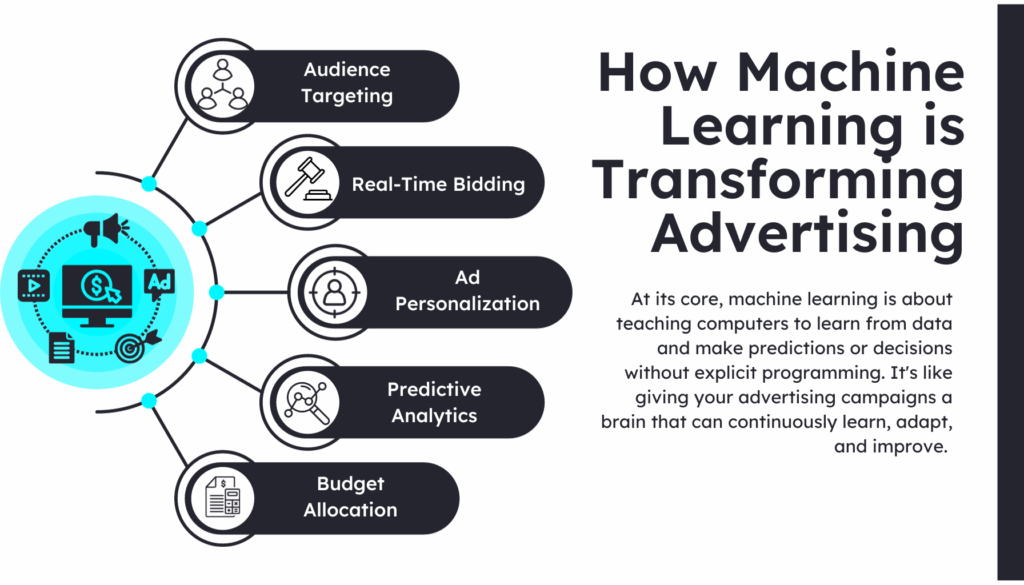
The speed at which machine learning operates in 2026 is staggering. During every single search auction, the algorithm evaluates thousands of variables including user intent, device type, location, time of day, and historical browsing patterns. These signals are processed in milliseconds to determine the exact bid required to reach a specific ROAS target. Manual bidding cannot compete with this level of granularity. Advertisers who still try to set manual bid adjustments often find themselves overpaying for low-value traffic or missing out on high-converting opportunities.
Growth in Regional Paid Search depends on precise data. When the machine learning model has access to a steady stream of conversion data, it builds a predictive profile of the ideal buyer. In 2026, these profiles have become incredibly accurate, even in the face of stricter privacy regulations. The shift toward probabilistic modeling has allowed platforms to fill in the gaps where direct tracking is unavailable, ensuring that bidding remains efficient despite a lack of traditional cookies.
One major hurdle for scaling in 2026 is signal noise. Algorithms need clean, consistent information to learn effectively. If a business sends conflicting signals—such as counting a newsletter signup the same as a high-value purchase—the machine learning model will struggle to prioritize the right users. Successful organizations spend more time on "conversion engineering" than on keyword lists. They map out the entire customer path and assign specific weights to different actions, ensuring the algorithm understands the true value of every interaction.
Multi-Channel Attribution and Incrementality
Single-channel measurement is a relic of the past. In 2026, multi-channel attribution has become the standard for any business looking to scale their Local Ppc effectively. Users rarely convert after a single search; they might see a video, interact with a social post, and then conduct a branded search. Machine learning models now excel at "stitching" these touchpoints together to show which channels are actually driving incremental growth and which are simply taking credit for conversions that would have happened anyway.
Professional Regional Paid Search provides the necessary data for automated bidding. By moving to a data-driven attribution model, companies can see how their upper-funnel efforts in 2026 support their bottom-funnel search results. This prevents the common mistake of cutting "low ROAS" channels that are actually providing the initial awareness needed for search conversions. Machine learning provides a bird's-eye view of the entire funnel, adjusting bids across different platforms to maximize the total return rather than optimizing each silo in isolation.
Incrementality testing has also become easier to perform at scale. By using machine learning to run split-market tests, advertisers in 2026 can prove the specific lift provided by paid search. This helps justify larger budgets and ensures that the ROAS reported in the dashboard reflects actual business growth. When the machine identifies that a specific segment of traffic is purely incremental, it can shift budget in real-time to capture that opportunity before competitors react.
Overcoming Privacy Constraints with Machine Learning
The privacy landscape of 2026 is more restrictive than ever, but machine learning has provided a way forward. With the total phase-out of third-party tracking, platforms have turned to "modelled conversions." These use aggregated and anonymized data to predict behavior without compromising individual user identity. While some might see this as a loss of control, it has actually led to more stable performance for Local Ppc. The models are less susceptible to the volatility of small data sets and can maintain steady performance even when direct tracking is blocked.
First-party data has become the most valuable asset in the search 2026 toolkit. By uploading encrypted lists of existing customers, businesses can use machine learning to find "lookalikes" who are likely to convert at a high ROAS. This creates a feedback loop where the more a company grows its customer base, the smarter its ad targeting becomes. Marketing teams that excel in Paid Search for Area Brands usually outperform competitors because they have a deeper well of proprietary data to train their models.
Modern measurement frameworks in 2026 also account for offline interactions. For many businesses, the final sale happens in a physical location or over a phone call. Machine learning bridges this gap by importing offline conversion data and matching it back to the original search ad. This allows for a 360-degree view of the return on investment, ensuring that the algorithm is optimizing for real-world revenue rather than just digital clicks.
Creative Optimization and Generative Assets
In 2026, the role of the creative has changed. Advertisers no longer write dozens of static headlines; they provide the machine with a "kit" of assets—headlines, descriptions, images, and videos—and let the algorithm assemble the best combination for each individual user. This level of personalization was impossible just a few years ago. Machine learning analyzes which combinations perform best for specific demographics and intents, constantly iterating to improve the click-through rate and conversion rate.
This automated creative testing happens at a scale no human team could manage. The system can test thousands of variations simultaneously, identifying small nuances that lead to big performance gains. For example, the machine might discover that users in a certain region respond better to urgency-based messaging, while users in another area prefer feature-heavy descriptions. By tailoring the creative to the audience in real-time, the algorithm improves the overall relevance of the ad, which in turn leads to a higher quality score and lower costs.
Budget Fluidity and Cross-Channel Scaling
Rigid budgets for specific channels are disappearing. In 2026, the most successful advertisers use "fluid" budgets that allow machine learning to move capital to wherever the highest ROAS is currently available. If search performance dips on a Tuesday but video performance spikes, the system can automatically reallocate funds to capture the better return. This ensures that no part of the daily budget is wasted on underperforming auctions.
This cross-channel approach requires a unified data layer. When the search algorithm knows what is happening on other platforms, it can bid more intelligently. If a user has already visited the website through a social ad, the search bid can be adjusted because that user is now further down the funnel and more likely to convert. This interconnected strategy is the key to scaling in the current year, as it treats the digital presence as a single unit rather than a collection of separate parts.
As we move through 2026, the competitive advantage lies with those who can most effectively train their machine learning models. It is no longer about who has the biggest budget, but who has the best data and the most efficient feedback loops. By focusing on profit-centric signals, embracing multi-channel attribution, and adapting to the privacy-first world, businesses can scale their search efforts to new heights while maintaining a healthy and predictable ROAS.
The transition to full automation requires a mindset shift. It means letting go of manual controls and trusting the data. For those willing to adapt, the rewards are clear: higher efficiency, lower waste, and a level of scale that was previously unreachable. Machine learning is not just a tool for optimization anymore; it is the engine that drives every decision in the modern paid search environment.

Latest Posts
The Evolution of Value-Based Bidding in 2026